







Dominion: The Railway That Built a Nation — and the Price of a Canadian Dream
A Review of Stephen R. Bown’s Dominion: The Railway and the Rise of Canada
A Review of Stephen R. Bown’s Dominion: The Railway and the Rise of Canada
There are moments in the history of nations when ambition exceeds reason, when the limitations of geography, finance and human endurance appear insurmountable, and when the determination of a comparatively small number of individuals alters the course of history. For Canada, the construction of the Canadian Pacific Railway was such a moment. It was an enterprise of almost unimaginable difficulty, undertaken by a young country whose political existence was still uncertain and whose geographical dimensions defied the practical limitations of nineteenth-century transportation.
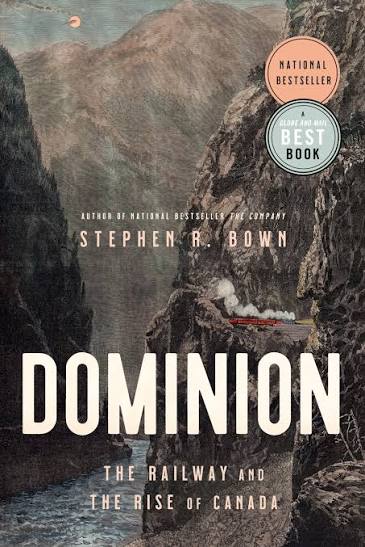
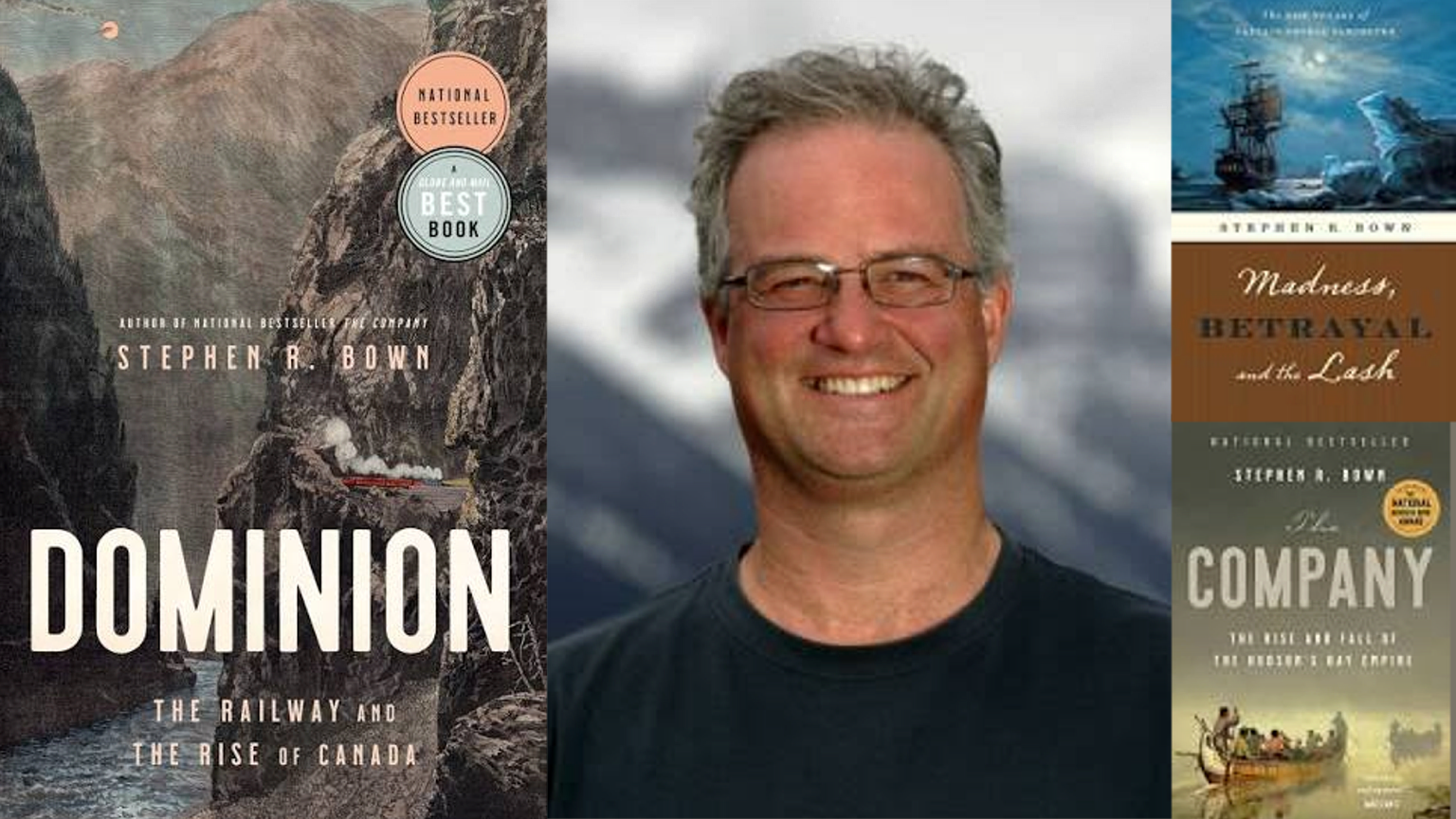
In Dominion: The Railway and the Rise of Canada, acclaimed Canadian historian Stephen R. Bown brings this extraordinary chapter of Canadian history to life in a sweeping, intellectually engaging account of the men and women, political ambitions, financial intrigues and human sacrifices that made the transcontinental railway possible.
The result is an impressive work of popular history, one that deserves a prominent place among contemporary examinations of Canadian nation-building. More than a history of railways, Dominion is an exploration of the creation of modern Canada, its ambitions, its accomplishments, its contradictions and its profound human consequences.
The Dream of a Continental Nation
When the Dominion of Canada emerged from Confederation in 1867, its future was far from assured. The new country possessed enormous ambitions but comparatively modest resources. Its constituent provinces were divided by geography, and its political leaders confronted the formidable challenge of creating a functioning national economy across a continent dominated by forests, lakes, prairies and mountains.
Sir John A. Macdonald understood that Confederation, if it was to survive and expand, required something more tangible than constitutional agreements and parliamentary speeches. It required transportation, communication, settlement and economic integration. Above all, it required a railway.
Bown presents the railway as both an instrument of national policy and a remarkable gamble. The creation of a transcontinental transportation system would allow the Dominion to assert its authority across the West, connect British Columbia with eastern Canada, encourage immigration and settlement, and establish a commercial alternative to the expanding railway networks of the United States.
The stakes were enormous. The United States had emerged from its Civil War as a continental power of unprecedented industrial and military strength. American expansion had already transformed the political map of North America, and there was little certainty that British Columbia, isolated on the Pacific coast, would remain permanently connected to British North America.
When British Columbia entered Confederation in 1871, the promise of a railway connection became one of the defining conditions of union. That promise, however, was considerably easier to make than to fulfil.
One of Bown’s greatest achievements is his ability to convey the sheer improbability of the enterprise. The Canadian government was committing itself to an undertaking that would challenge the financial resources of the nation, demand revolutionary feats of engineering, and test the political determination of successive governments.
The railway was not simply built because it made immediate economic sense. It was built because Canada’s political leaders believed that the future of their country depended upon it.
Macdonald, Politics and the Price of Ambition
At the centre of this great national undertaking stands Sir John A. Macdonald, the dominant political figure of Confederation and the principal architect of the transcontinental railway policy.
Bown’s account presents a political world in which national aspirations were inseparable from private interests, party loyalty, financial speculation and personal ambition. Macdonald’s determination to build the railway becomes a study in the complicated relationship between political leadership and the exercise of power.
The Pacific Scandal of 1873, which helped bring down Macdonald’s government, exposed the troubling intersection of railway financing and political fundraising. The scandal remains one of the defining episodes in nineteenth-century Canadian politics, illustrating how easily the pursuit of national objectives could become entangled with commercial advantage and partisan calculations.
Yet the railway project survived the political crisis. Macdonald returned to power in 1878, and the government ultimately reached an agreement with the syndicate that established the Canadian Pacific Railway Company in 1881.
Bown’s treatment of these events reminds readers that great national enterprises seldom emerge from political purity. They are forged through negotiation, compromise, ambition, financial risk and sometimes questionable conduct.
The historical importance of Macdonald’s achievement cannot be separated from these realities. His vision of a transcontinental Dominion proved enormously consequential, but the methods employed to achieve it remain legitimate subjects of historical scrutiny.
This tension is one of the book’s central strengths. The railway becomes a means of examining the nature of political power and the difficult distinction between the pursuit of the national interest and the ambitions of those who claim to represent it.
An Extraordinary Feat of Engineering
If the political story is compelling, the engineering story is nothing short of astonishing.
The construction of the Canadian Pacific Railway required thousands of workers to penetrate some of the most formidable landscapes on the continent. The Canadian Shield north of Lake Superior presented immense stretches of rock, forests, swamps and isolated wilderness. The Rocky Mountains and the mountains of British Columbia demanded solutions to engineering problems that challenged contemporary technology.
Surveyors ventured into difficult and frequently dangerous country, searching for routes through mountain passes and across river valleys. Engineers confronted the necessity of blasting tunnels, constructing bridges, cutting grades and moving immense quantities of rock and earth with equipment that appears primitive by modern standards.
Bown populates this story with the remarkable personalities who made the railway possible. Surveyors, financiers, contractors and railway executives emerge not as anonymous figures in a national enterprise, but as individuals whose personal qualities and decisions could determine the success or failure of the project.
Among the most memorable is William Cornelius Van Horne, the energetic American-born railway executive whose extraordinary organizational abilities proved essential to the rapid completion of the line. His determination, formidable personality and relentless pursuit of results helped transform an uncertain undertaking into a functioning transcontinental railway.
The book’s attention to such figures gives the narrative much of its vitality. Bown understands that history becomes compelling when large developments are presented through the experiences and decisions of recognizable individuals.
The railway was a triumph of industrial technology, but it was also an achievement of human ingenuity, perseverance and organizational brilliance.
The completion of the railway at Craigellachie, British Columbia, on 7 November 1885, marked one of the defining moments in Canadian history. Donald Smith’s driving of the ceremonial last spike symbolized the fulfilment of a national undertaking that had consumed governments, fortunes and thousands of working lives.
It was an extraordinary achievement, and Bown gives readers ample reason to appreciate its magnitude.
The Human Cost of Nation-Building
Where Dominion distinguishes itself most clearly from earlier popular accounts is in its determination to examine the consequences of railway construction for people whose experiences were often subordinated to the traditional story of national progress.
The familiar photograph of the last spike presents a group of comparatively prosperous men celebrating the completion of the railway. Missing from that image are many of the labourers whose dangerous work made the achievement possible, particularly the thousands of Chinese workers employed on the British Columbia sections of the line.
Bown broadens the narrative to include these men, their hardships, their unequal treatment and the prejudice they encountered. The labour of Chinese railway workers represents one of the most important and painful chapters in the history of the Canadian Pacific Railway.
Their contributions deserve recognition not merely as a qualification to the national achievement but as an essential part of the story itself.
The same is true of the Indigenous peoples whose territories were transformed by Canada’s westward expansion.
The construction of the railway was inseparable from the extension of Canadian sovereignty across the Prairies, the negotiation and implementation of treaties, the disappearance of the great buffalo herds, the establishment of reserves, and the increasing authority of the federal government over Indigenous communities.
Bown’s narrative gives substantial attention to the Indigenous leaders and communities confronting these changes. Figures such as Crowfoot emerge within the larger history of the West, reminding readers that the railway passed through territories with established peoples, political traditions and economic systems.
For Indigenous communities, the railway’s arrival could signify not simply technological progress but the acceleration of settlement, the loss of control over traditional territories and the transformation of their economic and political independence.
These developments deserve careful historical examination rather than a simplistic division between heroes and villains.
Bown’s willingness to integrate such experiences into the larger narrative is especially valuable. His railway is neither an uncomplicated national triumph nor merely a symbol of injustice. It is an undertaking whose benefits and consequences were distributed profoundly unequally.
Understanding both dimensions is essential to understanding Canadian history.
Beyond the National Myth
Any modern account of the Canadian Pacific Railway must inevitably be measured against the formidable achievement of Pierre Berton, whose The National Dream and The Last Spike brought the story of Canada’s great railway to generations of readers.
Berton wrote with narrative energy, dramatic imagination and an extraordinary ability to make historical events accessible to the general public. His books helped establish the construction of the Canadian Pacific Railway as one of Canada’s great national epics.
Bown approaches the same subject from the vantage point of a different generation.
Where Berton celebrated the dramatic personalities and heroic dimensions of the achievement, Bown places greater emphasis on its broader political, social and economic context. His account is particularly attentive to the relationship between railway development and the expansion of Canadian authority across the West.
These approaches need not be regarded as contradictory.
Berton remains indispensable for his remarkable storytelling and his ability to capture the excitement of an extraordinary undertaking. Bown provides a valuable contemporary perspective that expands the historical canvas and brings previously neglected experiences closer to the centre of the narrative.
Together, the works demonstrate how historical interpretation develops as new questions are asked of familiar events.
One of the great strengths of historical writing is its capacity to return to a well-known story and reveal dimensions that earlier generations overlooked. Dominion succeeds precisely because the railway is presented not as an isolated engineering accomplishment but as the central event in a far larger transformation of Canadian society.
The Strengths and Limitations of Dominion
Bown possesses an enviable talent for presenting complicated historical events in accessible and engaging prose. His interests extend beyond politics and biography to geography, technology, commerce, labour and the social transformations that accompany economic development.
This breadth is both the book’s greatest strength and, occasionally, its limitation.
Readers seeking a tightly focused, chronological history of railway construction may find themselves travelling through extended discussions of western settlement, colonial politics, Indigenous relations and the personalities who shaped nineteenth-century Canada. Yet these apparent departures generally serve a larger purpose: they explain why the railway was built and why its construction mattered.
There is also room for a more sustained consideration of the railway’s implications for French-English relations, the Maritime provinces and the broader constitutional development of the Dominion. The railway’s western orientation necessarily concentrates attention on the political ambitions of central Canada and the transformation of the Prairies and British Columbia, but its effects were national in scope.
The book’s moral complexity presents another challenge. Recognizing the tremendous achievements of the railway’s builders while acknowledging the injustices associated with Canadian expansion is no simple undertaking. The resulting narrative is necessarily less comfortable than older patriotic accounts.
Nevertheless, this complexity should be regarded as an advantage rather than a weakness.
The purpose of serious history is not to provide uncomplicated reassurance about the past. It is to explain what happened, why it happened, what was accomplished, and who experienced the consequences.
Bown’s willingness to confront those questions contributes substantially to the value of his work.
Why Dominion Matters Today
The significance of Dominion extends well beyond its account of nineteenth-century railway construction.
Canada remains a country whose economic prosperity and political cohesion depend upon transportation, communication and the movement of goods across immense geographical distances. The fundamental challenges confronted by Macdonald and his contemporaries have not entirely disappeared. They have assumed new forms in debates concerning infrastructure, national economic integration, regional development and Canada’s relationship with the United States.
The Canadian Pacific Railway helped create the physical framework within which modern Canada developed. It encouraged western settlement, facilitated the expansion of agricultural production, linked Canadian markets, and strengthened the Dominion’s ability to maintain a distinctive political existence on the North American continent.
Its consequences were also profound for Indigenous peoples and for the thousands of immigrant labourers whose contributions were essential to its construction.
What makes Bown’s book especially relevant is its insistence that these different experiences belong to the same national history.
The railway’s engineering achievements do not disappear when its human costs are acknowledged. Nor do those costs become less significant because the railway contributed to the survival and expansion of Canada.
A mature historical understanding must accommodate both.
Final Assessment
Stephen R. Bown has produced an ambitious, compelling and important contribution to the literature of Canadian history.
Dominion: The Railway and the Rise of Canada succeeds in transforming the familiar story of the Canadian Pacific Railway into a broader examination of how Canada emerged as a transcontinental nation. Its great achievement lies in connecting political vision, engineering accomplishment, commercial ambition and human experience within a single historical narrative.
Bown reminds us that Canada was not an inevitable consequence of geography or constitutional agreement. It was constructed through human decisions, frequently made under extraordinary pressure and in circumstances of profound uncertainty.
The railway was one of the principal instruments of that construction.
For readers interested in Confederation, Sir John A. Macdonald, the settlement of the Canadian West, British Columbia’s entrance into Canada, Indigenous history or the great engineering projects of the nineteenth century, Dominion offers a valuable and engrossing perspective.
It deserves to stand alongside Pierre Berton’s celebrated railway histories as an important account of one of the defining episodes in Canada’s national development.
Above all, the book invites Canadians to regard their history with curiosity rather than complacency, to recognize achievement without overlooking injustice, and to appreciate the remarkable combination of ambition, ingenuity, sacrifice and circumstance through which their country emerged.
Dominion is more than the story of a railway. It is the story of a nation being built — and of the extraordinary price, promise and consequences of that undertaking.
Highly recommended for readers of Canadian history, educators, students and everyone interested in understanding how Canada became a transcontinental nation.
Canada History Society — Book Review