







Canada History Society | Canadian Political and Constitutional History
Introduction: The Colony That Chose a Different Road
On March 31, 1949, Newfoundland entered Canadian Confederation as the country’s tenth province. The moment brought to an end more than eighty years of constitutional debate, political resistance, economic uncertainty and changing relations between Newfoundland, Great Britain and Canada. It also marked the conclusion of an extraordinary chapter in North American history: a people who had repeatedly defended their separate political existence had narrowly decided to surrender their status as a distinct dominion and become citizens of a larger federation.
The decision was neither inevitable nor universally welcomed. It had been shaped by the island’s distinctive maritime economy, its long attachment to Britain, the sacrifices of the First World War, the financial disasters of the Great Depression and the transformative effects of the Second World War. Above all, it reflected changing expectations about what government should provide and whether Newfoundland could best secure its future alone or as part of Canada.
In July 1948, the electorate divided almost evenly over this fundamental question. Confederation prevailed with 52.3 per cent of the vote, while 47.7 per cent supported the restoration of responsible government. The margin was narrow enough to leave enduring disagreements about the wisdom of the decision, the fairness of the constitutional process and the consequences of union.
Historian Raymond B. Blake, whose scholarship has examined Newfoundland’s entry into Canada and its subsequent integration, places the question of economic and social security at the centre of the debate. By the 1940s, the political choice confronting Newfoundlanders was not simply whether to preserve an inherited constitution. It was whether that constitution could sustain the living standards, opportunities and public services that an increasingly modern society expected.
Yet for the opponents of Confederation, the stakes were equally profound. Newfoundland had developed its own parliamentary institutions, political culture, commercial interests and sense of national identity. Confederation promised economic benefits, but it also meant transferring substantial political authority to Ottawa.
The history of Newfoundland’s entry into Confederation is therefore not simply a story of economic necessity overcoming national sentiment. It is the history of a society forced to reconsider the relationship between political independence, collective identity and material security.
I. Newfoundland Before Confederation: An Atlantic Society
Long before the Confederation debates, the island of Newfoundland and the territory of Labrador had histories extending back thousands of years through the lives and cultures of Indigenous peoples, including ancestors of the Inuit, Innu, Mi’kmaq and Beothuk. European activity subsequently transformed the region through fisheries, commerce, settlement and imperial rivalry.
From the sixteenth century onward, fishermen from England, France, Portugal, Spain and the Basque regions crossed the Atlantic to exploit the extraordinary abundance of cod in waters surrounding Newfoundland.
The seasonal fishery gradually encouraged permanent settlement. Fishing stations became communities, and communities developed into towns with churches, schools, merchants, warehouses and institutions of local government.
Newfoundland’s economy nevertheless remained unusually dependent upon the sea. Cod was not merely an export commodity; it was the foundation upon which employment, trade, credit and social relationships rested. The saltfish industry connected isolated coastal settlements to markets in southern Europe, the Caribbean and the wider Atlantic world.
This commercial geography helped produce a distinctive political outlook. Newfoundland’s closest economic connections were not necessarily with the mainland colonies of British North America. For many merchants and fishermen, London, Lisbon, the West Indies and European markets mattered more directly than Montreal or Toronto.
Political institutions evolved slowly. In 1832, Newfoundland obtained representative government, giving eligible voters the opportunity to elect members to a local legislature. In 1855, responsible government followed, establishing an executive accountable to an elected assembly.
These reforms were important achievements. They gave Newfoundland a growing measure of control over its domestic affairs and helped establish a political identity distinct from that of the neighbouring colonies.
By the time Canadian Confederation became a serious possibility in the 1860s, Newfoundland had already developed institutions and interests that many inhabitants were unwilling to surrender.
II. The First Confederation Debate, 1864–1869
The movement toward Canadian Confederation gathered momentum during the 1860s as politicians in the Province of Canada and the Maritime colonies confronted political instability, questions of economic development and anxieties about American expansion.
Newfoundland initially remained outside these discussions.
Its representatives did not attend the Charlottetown Conference of September 1864, originally convened to consider a union of Nova Scotia, New Brunswick and Prince Edward Island.
However, Newfoundland was invited to the Quebec Conference the following month. Frederic Bowker Terrington Carter and Ambrose Shea attended as delegates, joining representatives from the other British North American colonies in considering a broader federation.
The Quebec Conference produced seventy-two resolutions outlining a proposed constitutional system. Newfoundland’s delegates participated in the discussions, but their involvement did not commit the colony to joining the new federation.
Confederation offered several potential advantages. Supporters believed that political union could strengthen economic development, improve transportation links, expand commercial opportunities and provide the security associated with membership in a larger British North American state.
Yet opponents raised substantial objections.
Newfoundland’s economy depended heavily upon exports and international markets that operated differently from those of the mainland colonies. There were concerns about Canadian taxation, the transfer of political authority to a distant government, and the possibility that Newfoundland would possess too little influence within a much larger federation.
The island’s geographical separation reinforced these anxieties. Unlike New Brunswick or Nova Scotia, Newfoundland had no land connection with the proposed Dominion.
In 1869, Confederation became the central issue in a colonial general election. The pro-Confederation government of Frederic Carter was defeated decisively by the anti-Confederation movement led by Charles Fox Bennett.
Historian Raymond Blake explains the outcome by observing that voters saw “no economic or political benefit” in joining the federation.[1]
The result revealed more than a temporary disagreement over constitutional machinery. It showed that many Newfoundlanders believed their future could be secured through the continuation of separate political institutions and established commercial relationships.
For the time being, Newfoundland had chosen independence within the British Empire over union with Canada.
III. A Separate Political Course, 1869–1914
Following the 1869 election, Newfoundland continued to develop as a self-governing British possession.
Its politicians pursued economic diversification, railway construction, mineral development and improved access to international markets. The colony’s relationship with Canada remained important, but frequently involved competing interests rather than a shared national programme.
Fishing rights, tariffs, relations with the United States and the Labrador boundary all created questions requiring negotiation.
The Newfoundland Railway, constructed during the late nineteenth century, represented an ambitious attempt to transform the economy by opening the island’s interior to transportation, settlement and industrial development. Yet railway construction also placed considerable pressure upon public finances.
The possibility of Confederation reappeared during periods of economic difficulty.
In 1895, formal negotiations took place in Ottawa between Newfoundland and Canadian representatives. They ultimately failed.
Historian James K. Hiller, in his detailed reassessment of those negotiations, argues that one central problem was that “neither government wanted to be at the table.”[2]
Hiller’s interpretation is important because it challenges the assumption that Newfoundland’s exclusion from Confederation resulted entirely from an uncompromising nationalist rejection. Political calculations, financial disagreements and the attitudes of British imperial officials also helped determine the outcome.
Newfoundland entered the twentieth century still outside Canada. In 1907, it was formally recognized as a dominion within the British Empire, reflecting its established position as a self-governing political entity.
Yet this apparent constitutional maturity concealed underlying vulnerabilities. Newfoundland remained heavily dependent upon export markets, the fishing economy and international financial conditions over which its government exercised limited control.
The dangers would become unmistakable during the decades that followed.
IV. The First World War and Its Consequences
When Britain entered the First World War in August 1914, Newfoundland entered the conflict as a separate dominion of the British Empire.
Newfoundlanders volunteered for military service, joined the Royal Newfoundland Regiment and served in naval and other wartime capacities.
Their contribution was considerable for a society with a relatively small population.
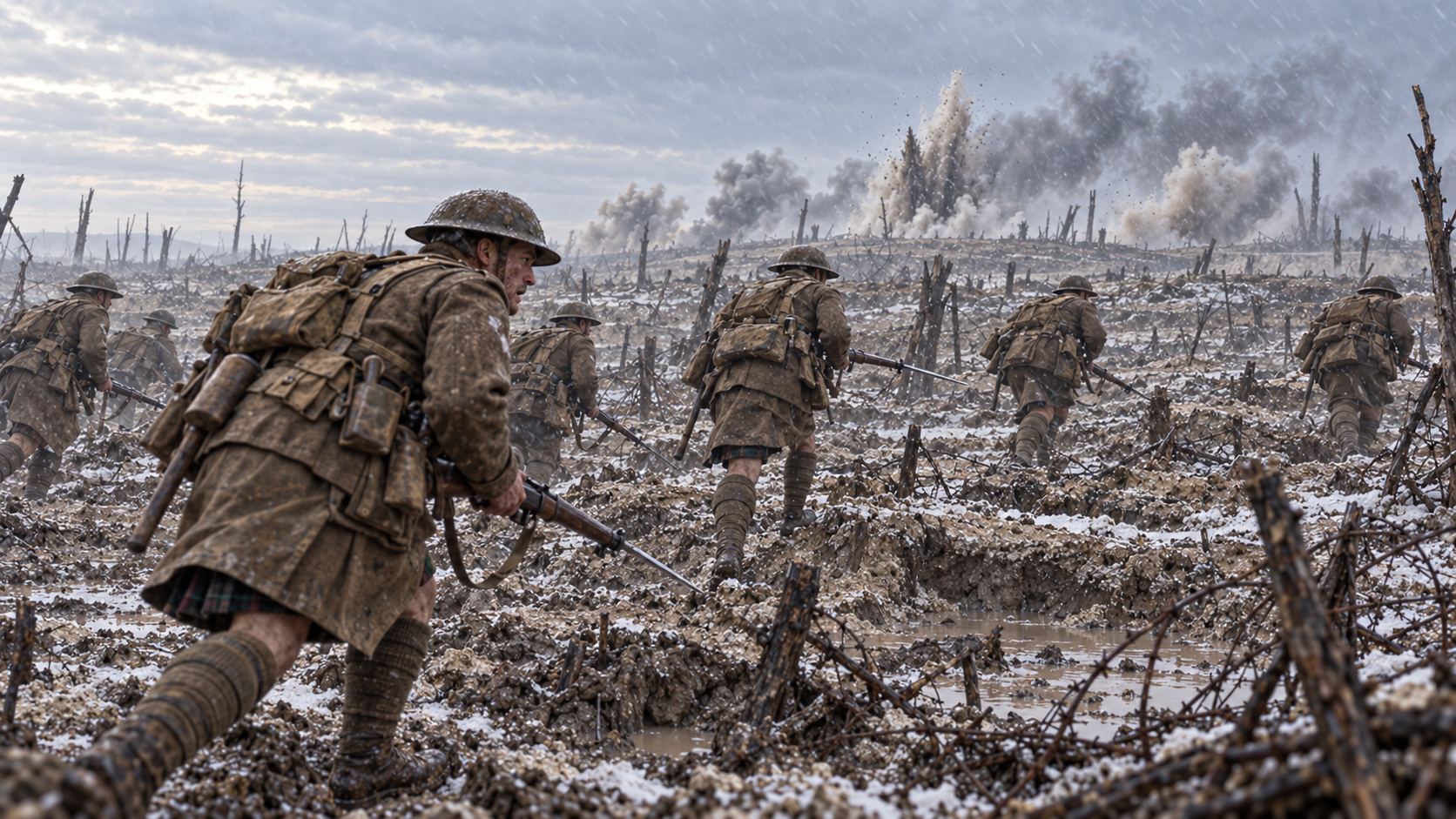
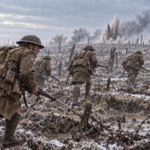
The most devastating moment came on July 1, 1916, during the Battle of the Somme. At Beaumont-Hamel, the Newfoundland Regiment suffered catastrophic casualties during an assault against heavily defended German positions.
Of the approximately 800 men committed to the attack, only 68 were available to answer roll call the following morning. More than 700 had been killed, wounded or reported missing.
The losses left deep scars across Newfoundland communities.
The war also imposed substantial financial costs. Newfoundland had to pay for military commitments, pensions, compensation and other obligations connected with its wartime service.
The consequences extended beyond the immediate postwar years. Public debt increased, and the government faced growing difficulty balancing expenditure against the revenues of a relatively narrow economy.
Military sacrifice and financial strain became intertwined with the political history of Newfoundland.
Historians have differed over how much of the subsequent financial crisis should be attributed to the war, railway expenditure, poor economic management or the international Depression. What is clear is that Newfoundland entered the 1930s with limited financial resilience.
V. The Great Depression and the Collapse of Responsible Government
The Great Depression struck Newfoundland with devastating force.
International demand for fish weakened, export prices declined, unemployment increased and government revenue contracted. Families dependent upon the fishing economy faced insecurity, while the state struggled to maintain public services and meet its financial obligations.
Newfoundland’s problems were magnified by the scale of its accumulated debt and the limited alternatives available to an economy dependent upon a few export industries.
By the early 1930s, public finances had reached a crisis.
In 1933, a British-appointed Royal Commission chaired by Lord Amulree investigated Newfoundland’s financial and political circumstances. Its report recommended the suspension of responsible government and the creation of an appointed Commission of Government.
The recommendation was extraordinary.
Newfoundland had possessed responsible government since 1855. Now, after nearly eighty years, its elected political institutions were to be suspended.
On February 16, 1934, the Commission of Government formally assumed office.
Six appointed commissioners—three from Britain and three from Newfoundland—administered the country’s principal departments under the chairmanship of the governor. Elections were discontinued, and the elected legislature ceased functioning.
Although Newfoundland remained a dominion in name, effective authority increasingly rested with an administration responsible to London rather than to the Newfoundland electorate.
Historian Peter Neary’s Newfoundland in the North Atlantic World, 1929–1949 remains an essential study of this period, examining the connections between the economic crisis, British imperial policy, the Commission of Government and the eventual movement toward Confederation.[3]
The loss of responsible government fundamentally altered Newfoundland’s constitutional position. It also weakened the assumption that separate political institutions necessarily guaranteed economic independence.
Yet the suspension of democracy did not resolve the underlying problems of poverty, dependence upon external markets or regional inequality.
For many Newfoundlanders, the Commission represented an unwelcome sacrifice made in desperate circumstances.
VI. The Second World War Changes Newfoundland’s Prospects
The Second World War brought another dramatic transformation.
Newfoundland and Labrador occupied a strategically important position on the North Atlantic approaches between North America and Europe. Their harbours, airfields and coastal facilities became essential to Allied transportation, communications and military operations.
Canadian and American forces established substantial military facilities in Newfoundland and Labrador. Construction, transport, supply services and military expenditure created employment on a scale previously unknown in many communities.
St. John’s, Gander, Goose Bay and other locations became connected to the expanding North American wartime economy.
Unemployment declined, government revenue improved and commercial activity expanded.
By the end of the war, Newfoundland had recovered much of its financial strength.
The transformation, however, created a new uncertainty. Would the prosperity associated with military expenditure continue after hostilities ended? Could the fishing economy sustain rising expectations for healthcare, education, housing and social security?
Newfoundlanders had become increasingly familiar with the living standards and public services available in Canada and the United States.
The question of political status therefore emerged in a different economic environment from that of the 1860s.
Confederation, previously rejected as an arrangement offering insufficient benefits, could now be presented as a means of securing greater economic stability and access to a larger system of public services.
For Britain, the issue was also changing. Exhausted by war and facing severe financial pressures, London was reluctant to assume continuing responsibility for Newfoundland’s economic future.
Canada, meanwhile, recognized the strategic and political importance of Newfoundland and Labrador within North America.
The interests of three governments—British, Canadian and Newfoundland—were increasingly converging, though not always for the same reasons.
VII. The National Convention and the Return of Constitutional Politics
In 1946, Newfoundland began the process of reconsidering its political future.
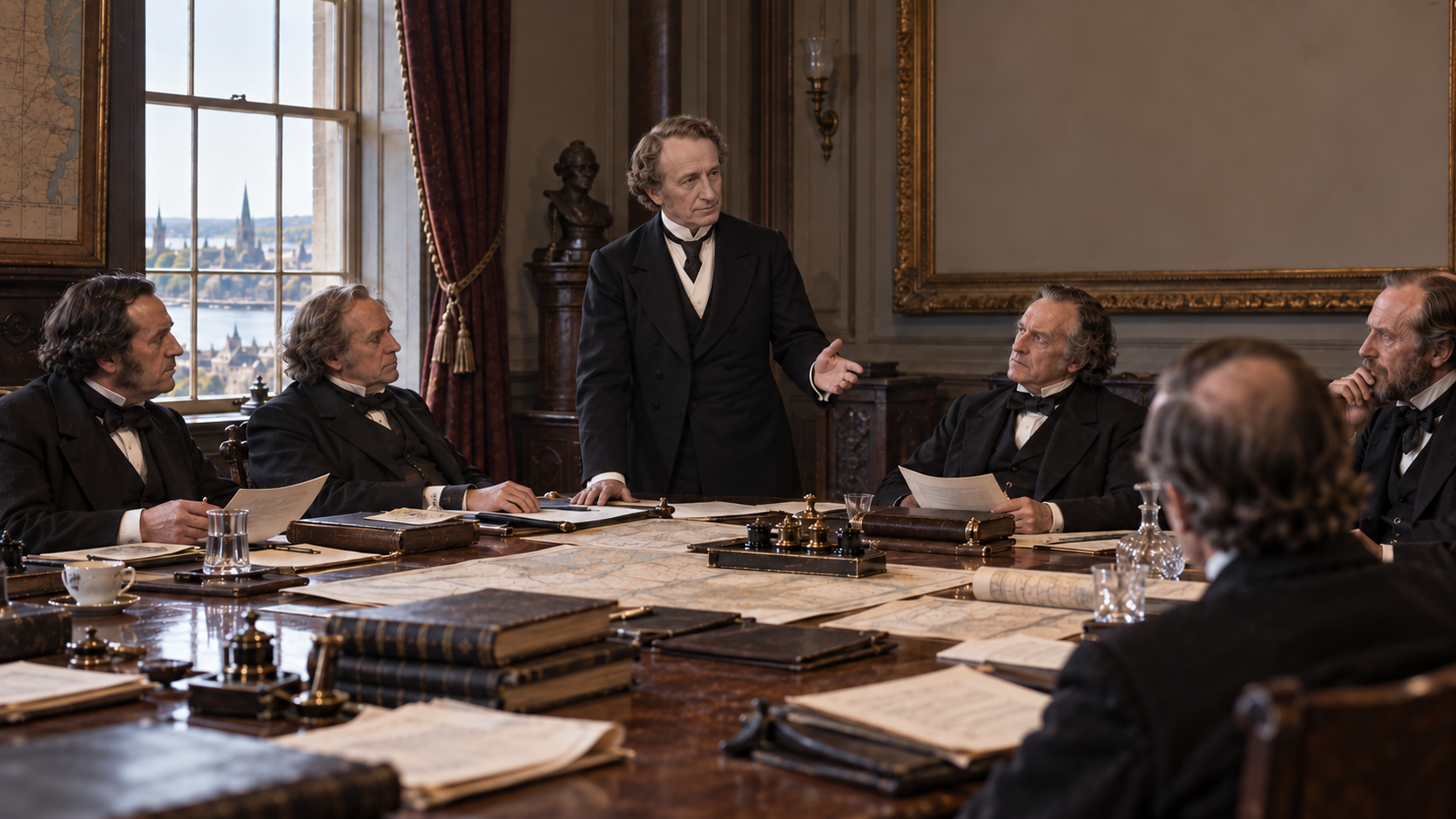
A National Convention of elected delegates assembled in St. John’s to investigate the country’s economic circumstances and assess possible constitutional arrangements.
Its members examined public finances, fisheries, transportation, education, healthcare, natural resources and the future responsibilities of government.
The Convention’s deliberations were broadcast over radio, bringing constitutional debate into homes and communities throughout Newfoundland and Labrador.
The discussions exposed considerable disagreements.
Some delegates advocated restoring responsible government. Others believed a continuation or modification of Commission government might provide temporary stability. A growing minority supported exploring Confederation with Canada.
The Convention became a national forum in which Newfoundlanders debated not only constitutional arrangements but also competing visions of their country’s future.
VIII. Joseph Smallwood and the Case for Confederation
Among the Convention’s most influential members was Joseph Roberts Smallwood.
Born in 1900, Smallwood had worked as a journalist, broadcaster, writer and political organizer. He possessed considerable skill in communicating complicated political issues to ordinary citizens.
Smallwood became the leading advocate for Confederation with Canada.
His argument rested upon the conviction that Newfoundland could not achieve lasting economic and social security without becoming part of a larger political and financial system.
In October 1946, speaking before the National Convention, Smallwood explained that he would support Confederation if it promised “strength, stability and security for Newfoundland.”[4]
He connected the constitutional question directly to living standards, public services and democratic government.
Smallwood’s approach reflected an important change in political expectations.
Where nineteenth-century Confederation debates had concentrated heavily upon tariffs, taxation, commercial relations and political autonomy, the debate of the 1940s increasingly revolved around family allowances, old-age pensions, employment security and the financial capacity of government.
Canada’s developing system of social programmes provided Smallwood with a powerful argument.
He maintained that union could offer Newfoundland families economic protections unavailable under the existing constitutional arrangement.
The appeal was particularly significant in rural communities where generations of families had experienced low incomes, seasonal employment and limited access to public services.
Smallwood’s campaign was energetic, persistent and highly organized. He travelled extensively, addressed public meetings and used radio and printed material to reach voters.
Yet his message was not accepted without challenge.
IX. The Case Against Confederation
Opposition to Confederation was neither irrational nor simply nostalgic.
Many anti-Confederates regarded responsible government as a constitutional right that Newfoundland had earned over generations of political struggle.
They believed that a people who had governed themselves before 1934 should regain that authority before considering any permanent constitutional change.
Major Peter Cashin became one of the most outspoken defenders of Newfoundland’s separate political identity. He argued that Britain had an obligation to restore the political institutions suspended during the Depression.
His supporters questioned whether Newfoundland should surrender sovereignty when its wartime financial position had improved.
Other opponents worried about Canadian control over fisheries, trade policy, taxation and natural resources.
Chesley Crosbie advocated the possibility of restoring responsible government and pursuing closer economic relations with the United States.
The debate was therefore not simply a contest between national pride and government benefits. It involved competing economic strategies, different assessments of Newfoundland’s financial capacity and opposing judgments about the proper location of political authority.
Historian Patrick O’Flaherty has offered a particularly critical interpretation of the circumstances surrounding Confederation. In Leaving the Past Behind: Newfoundland History from 1934, he characterizes aspects of the British–Canadian arrangement as “sneaky and repellant.”[5]
His interpretation reflects a continuing historiographical concern: whether Newfoundland’s constitutional future was shaped by undue pressure from governments whose interests did not necessarily coincide with those of the Newfoundland electorate.
Other historians have emphasized a different dimension.
Jeff A. Webb, whose research has examined the National Convention and the referendum campaigns, observes that “Newfoundlanders alone decided to join Canada through a democratic ballot with universal adult suffrage.”[6]
These interpretations are not necessarily mutually exclusive.
British and Canadian officials clearly favoured Confederation, and their influence upon the constitutional process deserves careful examination. Yet the electorate also participated in extensive public debates and ultimately made a decision through two referendums.
Recognizing outside political influence does not require denying the agency of Newfoundland voters. Equally, accepting the referendum result does not eliminate legitimate questions about the process through which the available alternatives were established.
X. The Referendums of 1948
The National Convention did not ultimately recommend including Confederation on the referendum ballot.
Nevertheless, the British government decided that Newfoundlanders should be permitted to vote on the possibility of union with Canada.
Three options were presented in the first referendum on June 3, 1948: restoration of responsible government, Confederation with Canada, and continuation of Commission of Government.
The result was inconclusive.
| Constitutional option | First referendum, June 3, 1948 |
|---|---|
| Responsible Government | 44.6% |
| Confederation with Canada | 41.1% |
| Commission of Government | 14.3% |
Because no option received an absolute majority, a second referendum was scheduled for July 22, 1948. Commission government was removed from the ballot, leaving voters to choose between responsible government and Confederation.
The campaign intensified.
Smallwood and the Confederates emphasized economic security and the benefits of Canadian social programmes. Anti-Confederates appealed to Newfoundland’s separate identity, democratic traditions and the possibility of renewed independence.
Regional differences were pronounced. Support for responsible government was particularly strong in St. John’s and much of the Avalon Peninsula, while Confederation generally attracted greater support elsewhere on the island and in Labrador.
Religious, economic and community relationships also influenced the campaign, although voting patterns cannot be reduced to any single division.
The second referendum produced the decisive result:
| Constitutional option | Votes | Percentage |
|---|---|---|
| Confederation with Canada | 78,323 | 52.3% |
| Responsible Government | 71,334 | 47.7% |
Confederation prevailed by 6,989 votes.
The result was legally decisive but politically narrow. A substantial minority of the population had voted to restore Newfoundland’s separate responsible government.
For supporters, the vote opened the prospect of greater economic security and a new political future. For opponents, it marked the impending end of Newfoundland’s distinct constitutional position.
The referendum did not erase those differences.
XI. Negotiating the Terms of Union
Following the referendum, representatives of Newfoundland and Canada undertook the final negotiations required to establish the new province.
The resulting Terms of Union addressed the distribution of governmental responsibilities, financial obligations, federal representation and the continuation of certain Newfoundland institutions.
Canada agreed to assume responsibility for major services normally administered by the federal government, including defence, postal services, the Newfoundland Railway and important transportation and communications functions.
Federal social programmes would extend to the new province, including family allowances, old-age pensions and unemployment insurance.
The agreement also provided financial transfers intended to assist Newfoundland during its transition into the Canadian federal system.
At the same time, Newfoundland would relinquish control over significant aspects of its former national administration, including customs, external relations and much of fisheries jurisdiction.
The province would receive representation in Canada’s Parliament, with seven members in the House of Commons and six senators.
The final Terms of Union were signed on December 11, 1948.
After the necessary approval by Canadian and British authorities, Newfoundland entered Confederation on March 31, 1949.
The province’s official name was then Newfoundland, although Labrador was included within its territory. The name Newfoundland and Labrador was formally adopted in 2001.
Joseph Smallwood became the first premier of the new province.
XII. Confederation and Its Unequal Consequences
Confederation brought substantial changes to Newfoundland society.
Access to federal social programmes provided new sources of household income. Family allowances, pensions and other public benefits contributed to improved living standards, while transportation, healthcare and education underwent major development during the decades that followed.
For many rural families, Confederation made government assistance more accessible and provided a measure of financial security that earlier generations had never experienced.
Yet the benefits were neither immediate nor uniform.
Newfoundland continued to struggle with unemployment, regional inequality, dependence upon natural resources and the economic challenges of remote communities.
Government-directed modernization also created new problems. Industrial development programmes did not always achieve their objectives, while resettlement policies disrupted long-established coastal communities.
The experience of Indigenous peoples requires particular attention.
The 1949 Terms of Union made no specific provision for the status or rights of Indigenous peoples in Newfoundland and Labrador. The omission had lasting consequences for the Innu, Inuit, Mi’kmaq and Southern Inuit, whose relationships with federal and provincial governments did not follow the same arrangements established elsewhere in Canada.
This aspect of Confederation reveals an important limitation of the constitutional negotiations. The political future of Newfoundland and Labrador was determined primarily through institutions and debates shaped by the settler population, while Indigenous rights and governmental responsibilities remained inadequately addressed.
Confederation must therefore be assessed not only through changes in living standards but also through its effects upon political authority, culture, community life and the distribution of rights.
XIII. Was Confederation Inevitable?
Looking backward from 1949, it can be tempting to regard Newfoundland’s entry into Canada as the natural completion of a process begun in 1864.
Such an interpretation obscures the uncertainties that shaped the decision.
In 1869, Newfoundland had overwhelmingly rejected Confederation. In 1895, negotiations had failed. During the early twentieth century, Newfoundland continued to pursue a separate political and economic course.
Even after the suspension of responsible government in 1934, union with Canada was not immediately inevitable.
The Second World War altered economic circumstances, but it also briefly strengthened Newfoundland’s public finances. The National Convention considered several alternatives, and the first referendum failed to produce a majority for Confederation.
The second referendum was won by a margin of less than five percentage points.
Different political decisions, economic circumstances or arrangements with Britain might have produced another outcome.
Historian Raymond Blake’s analysis is particularly valuable in explaining why the result differed so dramatically from that of 1869. Newfoundland had changed, but so too had the expectations of its electorate. Government was increasingly judged not simply by the preservation of constitutional independence but by its capacity to promote economic opportunity and protect families against insecurity.
For many voters, Confederation offered the most convincing answer to those expectations.
Others remained persuaded that independence was worth preserving and that Newfoundland possessed the resources, experience and identity necessary to govern itself.
Both positions formed part of a genuine constitutional debate.
The referendum result resolved the immediate political question without ending the wider historical argument.
Conclusion: A New Province, an Enduring Identity
The history of Newfoundland’s entry into Confederation is a story of remarkable political persistence and equally remarkable change.
For more than eighty years, Newfoundlanders resisted the assumption that their future necessarily belonged within Canada. They developed separate institutions, maintained Atlantic commercial relationships, endured war and depression, and repeatedly defended the political independence acquired during the nineteenth century.
Yet by the middle of the twentieth century, the world in which that independence had developed was disappearing.
International economic upheaval, the transformation of warfare, the expansion of social programmes and the increasing integration of North America created new expectations and new political choices.
Confederation offered the promise of security within a larger federation. Responsible government offered the possibility of renewing Newfoundland’s political independence.
In July 1948, the electorate chose Confederation by a narrow majority.
The decision altered the constitutional structure of Canada and transformed Newfoundland’s political future. It did not, however, erase the historical identity that had developed through centuries of Atlantic life.
Newfoundland’s sense of place, its distinctive language, traditions, literature, music and historical memory survived the constitutional transformation.
The lasting significance of Confederation lies partly in that distinction.
Newfoundland joined Canada because a majority concluded that the opportunities of union outweighed the advantages of continued political independence. But the society entering Confederation carried with it a history far older than the Canadian state—and an identity that could not be reduced to the result of a referendum.
Newfoundland’s road to Confederation was not an inevitable march toward Canadian nationhood. It was a prolonged and difficult national decision, shaped by economic necessity, political conviction, historical experience and competing visions of the future.
On March 31, 1949, Newfoundland became Canada’s tenth province.
Its separate constitutional history had ended. Its distinctive historical identity had not.
References and Historical Sources
The following references include primary documentation, peer-reviewed historical research and major scholarly works. Quotations have been limited to passages that can be verified through the cited publications or published scholarly reviews.
1. Raymond B. Blake. “Newfoundland and Canada: Confederation and the Search for Stability.” In Reconsidering Confederation: Canada’s Founding Debates, 1864–1999, edited by Daniel Heidt. Calgary: University of Calgary Press, 2018. An important examination of Newfoundland’s changing political and economic priorities between the Confederation debates of the 1860s and 1949. Read the chapter.
2. James K. Hiller. “The 1895 Newfoundland–Canada Confederation Negotiations: A Re-consideration.” Acadiensis. A detailed scholarly reassessment of the unsuccessful negotiations, emphasizing the political calculations of the Canadian, Newfoundland and British governments. Read the article.
3. Peter Neary. Newfoundland in the North Atlantic World, 1929–1949. Montreal and Kingston: McGill-Queen’s University Press, 1996. A major scholarly account of Newfoundland’s political, economic and diplomatic circumstances during the Depression, Second World War and Confederation debates.
4. Newfoundland National Convention. Debates, October 28, 1946. Joseph Smallwood’s arguments concerning the economic and constitutional conditions under which he would support Confederation. Digitized by the Confederation Debates Project, University of Victoria. Read the original debate.
5. Patrick O’Flaherty. Leaving the Past Behind: Newfoundland History from 1934. St. John’s: Long Beach Press, 2011. A critical interpretation of the Commission of Government and Confederation period. The quoted characterization is also documented in James E. Candow, “In Prowse’s Shadow,” Newfoundland and Labrador Studies. Read Candow’s scholarly review.
6. Jeff A. Webb. “The Way It Was Done: How Newfoundlanders Chose Confederation.” The Newfoundland Quarterly 95, no. 1 (December 2002): 25–32. An important analysis of the democratic process, British and Canadian influence, and Newfoundland’s constitutional choices. Read the original article.
7. Raymond B. Blake and Melvin Baker. Where Once They Stood: Newfoundland’s Rocky Road Towards Confederation. Regina: University of Regina Press, 2019. A substantial modern examination of the long and contested relationship between Newfoundland and Canada.
8. Raymond B. Blake. Canadians at Last: Canada Integrates Newfoundland as a Province. Toronto: University of Toronto Press, 1994. A detailed study of Newfoundland’s transition into Canadian federal institutions and the consequences of Confederation.
9. Sean T. Cadigan. Newfoundland and Labrador: A History. Toronto: University of Toronto Press, 2009. A scholarly synthesis of the province’s economic, political and social development.
10. James K. Hiller and M. F. Harrington, eds. The Newfoundland National Convention, 1946–1948: Debates, Papers and Reports. 2 vols. Montreal and Kingston: McGill-Queen’s University Press, 1995. An indispensable primary-source collection for the constitutional debates.
11. Newfoundland and Labrador Heritage Website. “Newfoundland and Canada: 1864–1949.” Memorial University of Newfoundland. Read the historical overview.
12. Newfoundland and Labrador Heritage Website. “The 1948 Referendums.” Memorial University of Newfoundland. Source for the referendum campaigns, voting figures and regional patterns. Read the referendum history.
13. Newfoundland and Labrador Heritage Website. “The Commission of Government, 1934–1949.” Memorial University of Newfoundland. Read the history.
14. Government of Canada and Government of Newfoundland. Terms of Union of Newfoundland with Canada. Signed December 11, 1948; effective March 31, 1949. Principal constitutional document establishing Newfoundland’s entry into Canada. Historical analysis of the Terms of Union.
15. Veterans Affairs Canada. “The Battle of Beaumont-Hamel.” Government of Canada. Documentation of the Newfoundland Regiment’s participation and casualties during the First World War. Read the historical account.
16. Newfoundland and Labrador Heritage Website. “Indigenous Peoples and Confederation.” Memorial University of Newfoundland. Examination of the omission of Indigenous peoples from the Terms of Union and the consequences for federal and provincial responsibilities. Read the article.
Canada History Society
The Canada History Society is a Canadian not-for-profit organization dedicated to researching, preserving and presenting Canadian history through documentary films, historical publications, interviews and educational programming.
Visit canadahistorysociety.ca for more articles, documentary films and Canadian history resources.