
By the Canada History Society
The Eleventh Hour: The Silence That Defines a Nation
Each November, as autumn draws towards winter and the last leaves fall from the trees, Canadians gather before monuments of stone and bronze. From the great National War Memorial in Ottawa to the smallest cenotaph in a rural community, they come together in an act of remembrance that has endured for more than a century.
Veterans stand beside serving members of the Canadian Armed Forces. Children gather with their teachers. Families carry photographs of relatives who once wore the uniform. The red poppy appears on coats and jackets across the country. Wreaths are laid, prayers are offered, and the solemn notes of the Last Post drift across public squares.
Then, at eleven o’clock on the eleventh day of the eleventh month, Canada falls silent.
For two minutes, the ordinary rhythm of life is interrupted. The silence connects generations separated by more than a century of history. It remembers soldiers who endured the trenches of the First World War, sailors who fought in the Atlantic, aircrew who flew over occupied Europe, Canadians who served in Korea, and those who lost their lives in Afghanistan and other conflicts.
Remembrance Day is one of Canada’s most significant national traditions. It is not simply a commemoration of military victories, nor is it a celebration of warfare. It is an occasion for acknowledging service, suffering, and sacrifice, and for reflecting upon the responsibilities that accompany peace.
Its origins lie in the catastrophe of the First World War, a conflict that transformed Canada and left wounds in almost every community. Its continuing significance lies in the determination that the lives lost in military service should never disappear from the nation’s memory.
The Great War and the Origins of Remembrance
When the First World War began in August 1914, Canada was a Dominion of fewer than eight million people. Britain controlled its own foreign policy and Canada’s declaration of war was not required for the country to become involved. Britain’s entry into the conflict consequently brought Canada into a struggle that few Canadians could have imagined would continue for more than four years.
The first contingents departed amid demonstrations of enthusiasm. Patriotic crowds gathered at railway stations and harbours to cheer the volunteers leaving for military service. There was a widespread expectation that the fighting would be short and decisive.
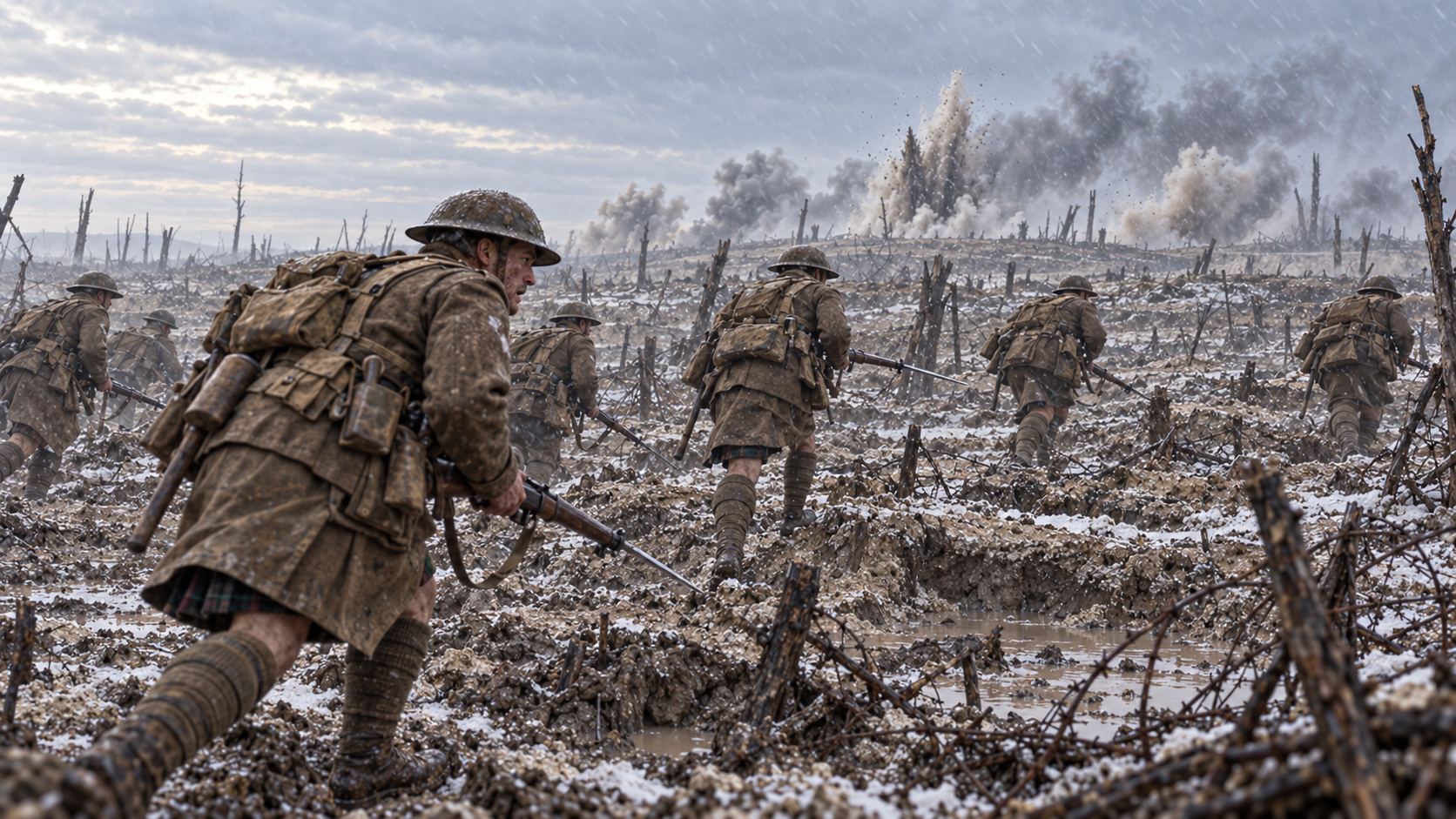
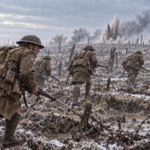
Instead, the war became a prolonged contest of industrial destruction. The Western Front descended into a landscape of trenches, barbed wire, artillery bombardments, machine-gun fire, and devastated villages. The scale of human loss was unprecedented in Canadian experience.
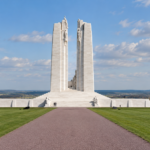
At Ypres in April 1915, Canadian soldiers faced the first large-scale German chlorine-gas attack on the Western Front. At the Somme in 1916, the Canadian Corps endured months of exhausting combat. At Vimy Ridge in April 1917, all four Canadian divisions participated in a successful assault that would eventually become one of the defining events in the country’s military memory. At Passchendaele later that year, Canadian soldiers struggled through mud, shellfire, and appalling conditions.
The final year of the war brought still more sacrifice. During the Hundred Days campaign of 1918, the Canadian Corps played a prominent role in the Allied offensives that helped bring Germany to seek an armistice.
By the end of the conflict, more than 650,000 Canadians and Newfoundlanders had served, and more than 66,000 had lost their lives. More than 172,000 had been wounded. Newfoundland, it should be remembered, was then a separate Dominion and would not join Canada until 1949.
These were immense losses for societies of relatively small populations. Entire communities were affected. Families lost sons, husbands, fathers, and brothers. The wounded returned with injuries that often required years of treatment. Others brought home psychological suffering that the medical profession of the period was poorly equipped to understand.
The war had strengthened Canada’s international standing and accelerated its movement towards greater autonomy within the British Empire. Yet its accomplishments were accompanied by grief and social division.
When the Armistice finally arrived, the question confronting Canadians was not only how to celebrate peace, but how to remember the dead.[1]
November 11, 1918: The Guns Fall Silent
On the morning of November 11, 1918, the armistice between Germany and the Allied powers came into effect at eleven o’clock.
After more than four years of warfare, the guns on the Western Front fell silent.
The cessation of fighting brought extraordinary relief. Crowds gathered in cities across Canada to celebrate the news. Church bells rang, flags appeared in public streets, and people embraced the prospect of an end to the terrible casualty lists that had become part of everyday life.
Yet there was another side to the celebrations.
For thousands of Canadian families, the announcement of peace came too late. The dead would not return. Their graves lay in France and Belgium, sometimes in places that surviving relatives could scarcely locate on a map. Thousands more had no known grave.
For these families, the end of the war did not mean the end of its consequences. Grief would continue for decades, and the absence of those who had died would remain a permanent part of family life.
It was this combination of relief and sorrow that gave rise to the movement for an annual day of remembrance.
On November 11, 1919, the first anniversary of the Armistice, commemorative ceremonies were held across Canada and throughout the British Empire.
King George V requested a two-minute silence at the hour when the fighting had ended. His appeal asked that ordinary activities cease so that people might concentrate upon the memory of the dead.
In his message, the King described the purpose as:
“reverent remembrance of the glorious dead.”
At eleven o’clock, businesses, schools, factories, and offices paused. Traffic stopped in many places, and Canadians stood silently in memory of those who had died.
The observance established a tradition that would outlive the generation that created it.
The two minutes of silence became the emotional centre of Canadian remembrance. Unlike military parades or public speeches, silence required no elaborate ceremony. It could be observed by anyone, anywhere. It offered a shared moment in which private grief and national memory could meet.
More than a century later, that tradition remains at the heart of Remembrance Day.[2]
From Armistice Day to Remembrance Day, 1919–1931
The first commemorations were known as Armistice Day, a name that emphasized the agreement that had ended the fighting in 1918.
During the early 1920s, Parliament debated how the anniversary should be observed. In 1921, legislation established Armistice Day as a legal holiday on the Monday of the week in which November 11 occurred. The same legislation linked the observance with Thanksgiving Day.
The arrangement proved unsatisfactory to many veterans and their supporters.
The anniversary was not an ordinary holiday. Its significance was inseparable from the precise moment when the guns had fallen silent. Moving the observance to a convenient Monday weakened the connection with the Armistice and risked reducing a solemn occasion to a general public holiday.
Veterans’ organizations pressed for November 11 to become the permanent date of commemoration.
In 1931, British Columbia Member of Parliament Allan Webster Neill introduced legislation that led to the adoption of November 11 as the fixed date and the replacement of the name Armistice Day with Remembrance Day.
The change was more significant than a matter of terminology.
Armistice Day commemorated an event: the ending of the First World War. Remembrance Day placed greater emphasis upon the people who had served and died, and upon the continuing responsibility to honour their memory.
Historian Jonathan F. Vance has explored this transformation in Canadian commemorative culture. In his article “Remembrance,” published by Canada’s History in 2014, Vance explains how the observance gradually moved beyond the celebration of victory and became an occasion for reflecting upon sacrifice and national values.
The renaming of the day also helped establish a tradition capable of accommodating future generations of military service, even though the legislators of 1931 were principally concerned with commemorating the First World War.
Less than a decade later, another global conflict would demonstrate the importance of that broader meaning.[3]
The Red Poppy: Canada’s Flower of Remembrance
No symbol is more closely associated with Remembrance Day than the red poppy.
Its origins are deeply connected with Canada’s experience of the First World War and, in particular, with the work of Lieutenant-Colonel John McCrae.
Born in Guelph, Ontario, McCrae was a physician, poet, and soldier who served with Canadian forces during the war. In the spring of 1915, during the Second Battle of Ypres, he witnessed the destruction and death that had overtaken the battlefield.
The death of a fellow officer and friend, Lieutenant Alexis Helmer, profoundly affected him.
In May 1915, McCrae composed the poem In Flanders Fields, which opened with the memorable words:
“In Flanders fields the poppies blow”
The poem evokes the fragile beauty of red flowers growing amid the graves of soldiers and the contrast between the ordinary rhythms of nature and the destruction caused by warfare.
Published in December 1915, the poem became widely known throughout the English-speaking world.
McCrae would not live to see the Armistice. He died of illness in France in January 1918, ten months before the fighting ended.
The poppy’s development into an international symbol of remembrance involved several individuals. American humanitarian Moina Michael began wearing a poppy in memory of the war dead in 1918. French humanitarian Anna Guérin subsequently promoted artificial poppies as a means of raising funds for people devastated by the war.
In 1921, Guérin brought the idea to Canada, where the Great War Veterans Association, a predecessor of the Royal Canadian Legion, adopted the poppy as its flower of remembrance.
The first Canadian poppy campaign took place that year.
The custom endured because it combined remembrance with practical support for the living. The sale and distribution of poppies helped raise funds for veterans and families who faced hardship, illness, or disability.
Today, the Royal Canadian Legion continues this work through its annual Poppy Campaign.
For Canadians, the small red flower has become an outward expression of an inward commitment. Its simplicity is part of its power. It can be worn by a veteran, a child, a new Canadian, or a person whose connection with military history is entirely through the lives of earlier generations.
Each poppy is a reminder that remembrance belongs not only to governments and military institutions, but to individual citizens.[4]
The Cenotaphs: A Country Builds Its Memory
In the years following the First World War, communities across Canada began constructing monuments to their war dead.
Some were elaborate works of sculpture. Others were modest stone memorials standing outside town halls, churches, schools, or railway stations.
Their purpose was fundamentally the same.
A generation had lost thousands of young people whose remains were buried overseas. Families could not easily visit their graves, and in many cases no identifiable remains had been found.
Communities therefore created places where the names of those who died could be preserved.
These memorials became a permanent feature of the Canadian landscape.
They appeared in large cities, small towns, farming settlements, and remote communities. Their inscriptions often recorded the names of men who had grown up together, attended the same schools, worked in the same industries, and departed for war from the same railway platforms.
Historian Jonathan Vance, in Death So Noble: Memory, Meaning, and the First World War, examines the ways Canadians sought to make sense of the conflict through monuments, ceremonies, literature, and collective memory.
Such commemorations were not merely records of military history. They were efforts to give meaning to loss and to ensure that those who died retained a place within the communities they had left behind.
The names upon these monuments also reveal the democratic character of much Canadian remembrance. Officers and ordinary soldiers frequently appear together, their differences in military rank less important than their shared sacrifice.
The memorials became a link between the dead and the living. They allowed families to mourn, veterans to remember comrades, and succeeding generations to encounter the history of their communities.
Their continued existence remains important because they restore individuality to the immense statistics of war.
A monument may commemorate thousands, but every name represents a separate human life.[5]
The National War Memorial and the Tomb of the Unknown Soldier
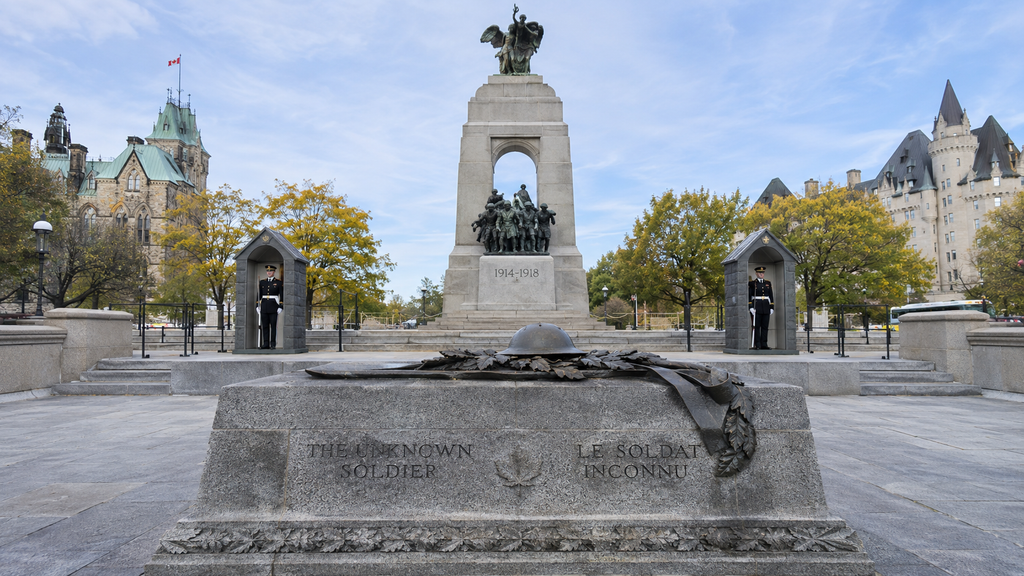
Canada’s principal national place of remembrance stands in Confederation Square in Ottawa.
The National War Memorial, designed by the British sculptor Vernon March, was unveiled by King George VI on May 21, 1939.
Its central feature is a great stone arch through which bronze figures representing Canadian military personnel advance. The monument was originally dedicated to those who served in the First World War and bore the dates 1914–1918.
There was a terrible historical irony in the timing of its unveiling.
Only a few months later, the Second World War began.
The National War Memorial would subsequently acquire a broader meaning, becoming a place to honour Canadians who served and died in successive conflicts. It was rededicated in 1982 to acknowledge the Second World War and Korean War, and further inscriptions were added in 2014.
One of the most moving developments in Canadian remembrance occurred in 2000.
That year, the remains of an unidentified Canadian soldier were brought home from Cabaret-Rouge British Cemetery in France, near Vimy Ridge.
The soldier’s name was unknown. His family, home community, and personal history could not be established.
Yet it was precisely this anonymity that gave his return such profound significance. He represented the thousands of Canadians whose remains had never been identified and whose families had been denied the consolation of a known grave.
On May 28, 2000, his remains were interred in the Tomb of the Unknown Soldier at the foot of the National War Memorial.
The tomb created a permanent connection between the distant battlefields of the First World War and the centre of Canadian national life.
Each Remembrance Day, when wreaths are laid in Ottawa, the ceremony takes place beside the grave of a man who could represent any one of the country’s missing war dead.
His identity is unknown, but his sacrifice is remembered.
The tomb reminds Canadians that the meaning of remembrance does not depend upon fame, rank, or individual recognition.
Even a soldier whose name has been lost to history remains entitled to the gratitude and remembrance of the country he served.[6]
The Second World War and the Expansion of Remembrance
When Canada entered the Second World War in September 1939, the memory of the previous conflict was still painfully fresh.
Many Canadians who enlisted were the sons and daughters of families that had already experienced the losses of 1914–1918.
Once again, Canadians crossed the Atlantic to serve in a war whose consequences would reach into almost every community.
Canadian sailors fought the Battle of the Atlantic, escorting merchant shipping across dangerous waters threatened by German submarines. Aircrew served in Bomber Command and other Allied air operations. Soldiers fought at Dieppe, in Sicily and Italy, in Normandy, and during the liberation of northwestern Europe.
Canadian women served as nursing sisters and in the women’s divisions of the armed services, while others contributed to industrial production, agriculture, transportation, and a vast range of essential wartime work.
More than one million Canadians and Newfoundlanders served in uniform during the Second World War. More than 45,000 lost their lives.
The end of the war in 1945 brought celebrations of victory, but it also renewed the national responsibility to commemorate another generation of dead.
Remembrance Day consequently expanded beyond its original association with the First World War.
Historian Jonathan Vance has explained how the two world wars became linked within Canada’s national memory. Although they arose from different historical circumstances, their scale, suffering, and consequences encouraged Canadians to commemorate them within a common tradition.
The November 11 observance remained, but its meaning widened.
The sons and daughters of the generation that had fought in 1914–1918 were now remembered alongside their parents’ generation.
The nation’s memorials had become witnesses to two world wars.[7]
Korea, Peacekeeping, Afghanistan, and Modern Service
The decades following 1945 demonstrated that the end of the Second World War had not brought an end to military conflict.
In 1950, Canada joined the United Nations effort to resist North Korea’s invasion of South Korea. More than 26,000 Canadians served during the Korean War, and 516 died.
The Korean conflict became known in Canada as the Forgotten War, reflecting the relatively limited public attention it received compared with the two world wars.
For those who served, however, its dangers and sacrifices were no less real.
Canadian military personnel subsequently participated in numerous international peacekeeping and peace-support operations. From the Middle East and Cyprus to the Balkans and elsewhere, they served in difficult and sometimes dangerous circumstances.
The image of the Canadian peacekeeper became an important part of Canada’s international identity, although peacekeeping itself frequently involved serious risk, political complexity, and exposure to violence.
In the twenty-first century, Canadian personnel served in Afghanistan, where 158 Canadian Armed Forces members lost their lives during the mission.
For the families of those killed in Afghanistan, Remembrance Day possesses an immediacy that differs from the historical memory of the First World War. Their grief belongs to the living generation. Their photographs, letters, and personal belongings are preserved in homes across Canada.
The same is true of veterans who returned from modern operations with lasting injuries, psychological trauma, or other difficulties associated with military service.
Remembrance Day must therefore recognize both the dead and the living.
Honouring the fallen is essential, but the obligations created by military service do not end when a soldier returns home.
Support for veterans, medical care, rehabilitation, and assistance to families are practical expressions of the same national responsibility represented by the poppy and the annual silence.
Remembrance without concern for those who survive would be incomplete.[8]
Indigenous Veterans and the Wider Canadian Experience
The history of Canadian military service includes contributions from First Nations, Métis, and Inuit peoples, whose experiences have not always received adequate recognition.
Indigenous people served in Canadian military operations long before the First World War, and thousands volunteered during the conflicts of the twentieth century.
More than 4,000 Indigenous people are estimated to have served during the First World War.
They included soldiers who became respected for their courage, skill, and service, even while Indigenous communities in Canada faced discrimination, restrictions on political rights, and unequal treatment.
The difficulties did not necessarily end when veterans returned home.
Indigenous veterans sometimes faced barriers to benefits, recognition, and opportunities that differed from those available to non-Indigenous servicemen.
The need to recognize these experiences contributed to the establishment of Indigenous Veterans Day, observed annually on November 8.
Its development during the early 1990s reflected the determination of Indigenous veterans and their supporters to ensure that their service received appropriate public recognition.
Today, Indigenous Veterans Day and Remembrance Day provide complementary opportunities to examine the contributions and experiences of First Nations, Métis, and Inuit military personnel.
Other communities have distinct traditions of remembrance.
In Newfoundland and Labrador, July 1 is both Canada Day and Memorial Day, commemorating the terrible losses suffered by the Newfoundland Regiment at Beaumont-Hamel on July 1, 1916.
At the time, Newfoundland was not part of Canada. The Newfoundland Regiment fought as a formation of a separate Dominion of the British Empire.
The preservation of Memorial Day on July 1 demonstrates that Canadian remembrance encompasses different regional histories and experiences.
The larger history of military service also includes French-speaking Canadians, Black Canadians, Chinese Canadians, Japanese Canadians, immigrants, women, and others whose contributions were sometimes overlooked or inadequately recognized.
A fuller national remembrance requires that their stories be examined and preserved alongside those more familiar from traditional military histories.
History is enriched when the experiences of all those who served are brought into the national record.[9]
The Importance of Remembrance Day in Modern Canada
More than a century has passed since the Armistice of 1918.
The veterans who survived the First World War have died, and the generation that fought the Second World War is rapidly disappearing from living memory.
Their passing presents Canadians with an important responsibility.
For earlier generations, remembrance often meant recalling people they had known personally. A veteran standing before a cenotaph might remember comrades who had shared his trench, served aboard his ship, or flown in his aircraft. A parent might remember the face of a son whose name appeared on the monument.
For later generations, remembrance increasingly depends upon education, historical research, photographs, letters, diaries, oral histories, and the preservation of national memorials.
This makes the work of historians, archives, museums, schools, and historical societies especially important.
Remembrance must remain connected to historical knowledge. The courage of Canadian soldiers deserves recognition, but it must be understood within the actual circumstances of the conflicts in which they served.
The First World War was not an uncomplicated story of national unity. It exposed political tensions, produced the Conscription Crisis of 1917, and imposed enormous burdens upon families and communities.
The Second World War involved extraordinary military sacrifice, but its domestic history also included restrictions on civil liberties and the forced removal and dispossession of Japanese Canadians.
Other military operations have raised difficult questions about national interests, international responsibilities, and the conduct of war.
These complexities do not diminish remembrance. They make it more meaningful.
To remember those who served is not necessarily to approve every political decision that led to a war. Nor does commemorating military sacrifice require overlooking suffering among civilians or the destruction inflicted upon other societies.
A serious understanding of Remembrance Day must distinguish the experiences of those who served from the policies and decisions of governments.
Historian Jonathan Vance has argued that commemoration should not be confused with the celebration of conflict. Its deeper purpose lies in the values societies seek to preserve and in the remembrance of individuals whose lives were shaped or ended by war.
This distinction is vital.
Remembrance Day offers Canadians a shared national ceremony without requiring them to hold identical interpretations of every conflict.
It provides an occasion to honour service, reflect upon historical consequences, and recognize that peace cannot be taken for granted.
Teaching Remembrance to Future Generations
The continued importance of Remembrance Day depends upon the willingness of succeeding generations to understand and preserve its meaning.
In Canadian schools, November 11 offers an opportunity to introduce students to military history, citizenship, the experiences of veterans, and the human consequences of international conflict.
The study of war should not be confined to memorizing battles, dates, or casualty figures.
Students benefit from examining letters written by soldiers, the diaries of nursing sisters, photographs of military cemeteries, and the names inscribed upon memorials in their own communities.
Through these sources, they can discover that the people who served were not simply figures in historical accounts. They were individuals with families, occupations, ambitions, and personal histories.
They came from farms and cities, fishing villages and mining towns, schools and factories.
Many were young people whose lives had scarcely begun.
The preservation of their stories allows students to understand military service through the experiences of ordinary Canadians.
Historical societies have a particular responsibility in this work.
By producing documentaries, preserving archival records, conducting interviews, and making reliable historical information accessible to the public, organizations such as the Canada History Society can help ensure that remembrance remains connected to the historical evidence.
Each photograph identified, each veteran interviewed, each historical document preserved, and each carefully researched account contributes to a more complete understanding of the past.
The phrase “Lest We Forget” is not merely a ceremonial conclusion.
It is a responsibility.
Conclusion: The Duty of Memory
The history of Remembrance Day is, ultimately, a history of how Canadians have confronted the human cost of war.
It began with the grief of a generation that had survived the First World War and struggled to honour more than 66,000 Canadians and Newfoundlanders who had died.
It grew through the creation of cenotaphs, the adoption of the poppy, and the establishment of November 11 as a permanent national observance.
It acquired new meaning after the Second World War, expanded to embrace the Korean War and later military operations, and continues to evolve as Canadians examine the experiences of those whose service has not always been fully acknowledged.
At the National War Memorial in Ottawa, the Unknown Soldier rests beneath a granite tomb. His identity has vanished, but his presence represents thousands of others whose graves are unknown or lie far from home.
Across the country, memorials preserve the names of those who never returned. Their inscriptions are reminders that the immense history of warfare is composed of individual lives.
The true importance of Remembrance Day lies in the relationship between those lives and the society that survives them.
For two minutes each November 11, Canadians are asked to interrupt the ordinary demands of daily life and consider the sacrifices that previous generations endured.
The silence cannot restore the dead. It cannot erase the suffering of veterans or the grief of their families. It cannot undo the destruction caused by war.
But it can preserve memory.
It can remind a nation that peace is precious, that service carries responsibilities for both individuals and society, and that those who died should never become anonymous figures in the pages of history.
In that silence, Canadians remember not only the battles and victories of the past, but the people whose lives were forever altered by them.
That is the enduring purpose of Remembrance Day.
Lest we forget.
Notes and References
Chicago-style notes
- Veterans Affairs Canada, “First World War,” Government of Canada, https://www.veterans.gc.ca/en/remembrance/military-history/first-world-war.
- Department of National Defence, “Remembrance Day: History of Remembrance Day,” Government of Canada, https://www.canada.ca/en/department-national-defence/services/military-history/history-heritage/remembrance-ceremony/2.html.
- Jonathan F. Vance, “Remembrance,” Canada’s History, October 15, 2014, https://www.canadashistory.ca/explore/military-war/remembrance.
- Royal Canadian Legion, “The Poppy,” https://legion.ca/remembrance/the-poppy; Veterans Affairs Canada, “The Poppy,” https://veterans.gc.ca/en/remembrance/get-involved/ways-remember/poppy.
- Jonathan F. Vance, Death So Noble: Memory, Meaning, and the First World War (Vancouver: UBC Press, 1997); Canadian War Museum, “Canada Remembers,” https://www.warmuseum.ca/remembrance-day-resources/canada-remembers.
- Veterans Affairs Canada, “National War Memorial,” https://www.veterans.gc.ca/en/remembrance/memorials/canada/national-war-memorial; Canadian Heritage, “Tomb of the Unknown Soldier,” https://www.canada.ca/en/canadian-heritage/services/art-monuments/monuments/tomb-unknown-soldier.html.
- Veterans Affairs Canada, “Second World War,” https://veterans.gc.ca/en/remembrance/military-history/second-world-war; Vance, “Remembrance.”
- Veterans Affairs Canada, “Korean War,” https://veterans.gc.ca/en/remembrance/military-history/korean-war; House of Commons Debates, November 2, 2022, https://www.ourcommons.ca/DocumentViewer/en/44-1/house/sitting-123/hansard.
- Department of National Defence, “Beyond Remembrance: The Meaning of Indigenous Veterans Day,” November 6, 2025, https://www.canada.ca/en/department-national-defence/maple-leaf/defence/2025/11/beyond-remembrance-the-meaning-of-indigenous-veterans-day.html; Veterans Affairs Canada, “Battle of Beaumont-Hamel,” https://www.veterans.gc.ca/en/remembrance/military-history/first-world-war/battle-beaumont-hamel.
Selected Bibliography
Canadian War Museum. “Canada Remembers.” https://www.warmuseum.ca/remembrance-day-resources/canada-remembers.
Department of National Defence. “Remembrance Day: History of Remembrance Day.” Government of Canada. https://www.canada.ca/en/department-national-defence/services/military-history/history-heritage/remembrance-ceremony/2.html.
Royal Canadian Legion. “The Poppy.” https://legion.ca/remembrance/the-poppy.
Vance, Jonathan F. Death So Noble: Memory, Meaning, and the First World War. Vancouver: UBC Press, 1997.
Vance, Jonathan F. “Remembrance.” Canada’s History, October 15, 2014. https://www.canadashistory.ca/explore/military-war/remembrance.
Veterans Affairs Canada. “First World War.” Government of Canada. https://www.veterans.gc.ca/en/remembrance/military-history/first-world-war.
Veterans Affairs Canada. “National War Memorial.” Government of Canada. https://www.veterans.gc.ca/en/remembrance/memorials/canada/national-war-memorial.
Veterans Affairs Canada. “The Poppy.” Government of Canada. https://veterans.gc.ca/en/remembrance/get-involved/ways-remember/poppy.